
My Writing
Escapism That Matters
I write stories that make the impossible feel real and the fantastic feel emotionally true.
To see what that means:
Who I Am
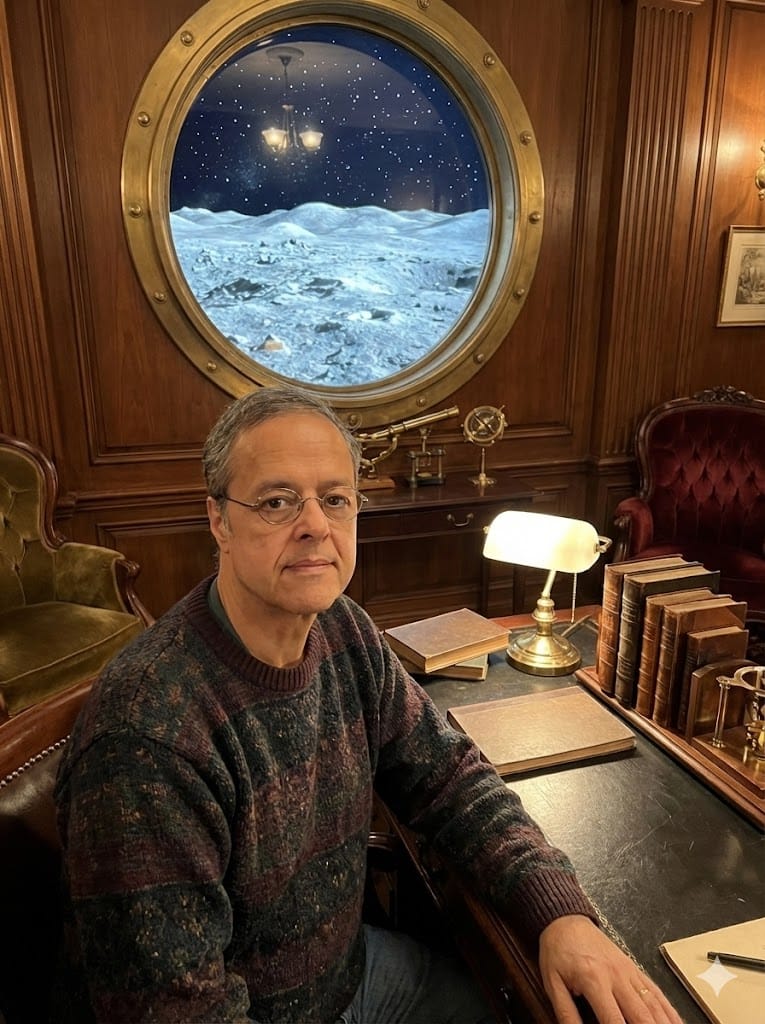
I'm a software engineer who has spent my career on public interest projects: documenting pesticide use in sensitive ecosystems, tracking the spread of infectious agents, and surveying refugee needs in humanitarian crises. I bring the same analytical rigor, humane focus, and attention to craft to my fiction, creating stories to entertain and, occasionally, inspire.
Writing What I Know
The advice to write what you know
may seem irrelevant in science fiction or fantasy, which are about things that don’t
exist—like faster-than-light travel—or even things that can't exist, like ghosts and magic.
Yet when exploring beyond the fields we know, recognizable emotional landmarks are even more essential.
Stories with ray-guns and magic wands need characters and experiences readers can relate to:
- The perfectionist who sabotages herself with impossible standards.
- The narcissist boss who blames employees for their own shortcomings.
- The person carrying regret from a lost chance at love.
Miraculous worlds feel real only when the emotions inside them are recognizable.
Honoring the Genre Contract
In space opera and romance, readers accept the improbable—but it must feel real. I ask myself:
- What does it actually feel like to be the heroine in a romance novel? Vulnerable, uncertain, and fully exposed.
- What does the galaxy look like to a hypercompetent space hero? Like it’s being run by dangerously incompetent people.
- Where does extraordinary ability come from? From a relentless drive for self-improvement that exacts a price, because it's rooted in self-criticism.
The consequences of impossibility must feel plausible, and the stakes emotionally authentic, or readers get lost in a fog of incomprehensible magic. Interested readers can read my technical paper on making fantasy emotionally plausible.
How Can Escapism Matter?
People deserve a break from a media atmosphere which makes them feel helpless and alone.
But the things they are encouraged to do about it --- the doom scrolling, fruitless disputes with strangers, the self-righteous cancel campaigns -- are cynical attempts to harvest their attention for advertising revenue that can only make them feel worse.
I write stories about relatable heroes so that readers can remember what having agency, purpose, and human connection feels like.
In a world where people are reduced to feeling helpless, alienated and alone, we need reminding that we none of those things, and escapism makes that fun.
My Mission
My goal is to write high-quality genre fiction that honors the reader’s trust, making the marvelous and improbable feel real, to deliver a message of empowerment and hope.
Come, my friends, 'Tis not too late to seek a newer world. / Push off, and sitting well in order smite / The sounding furrows; for my purpose holds / To sail beyond the sunset, and the baths / Of all the western stars, until I die. / It may be that the gulfs will wash us down; / It may be we shall touch the Happy Isles, / And see the great Achilles, whom we knew.—Alfred, Lord Tennyson, “Ulysses”
Engage with the Mission
Experience emotionally engaged science fiction:
Read a novel with a message of empowerment:
Keep up to date with Spacefaring Union news: